Showing posts with label microsoft. Show all posts
Showing posts with label microsoft. Show all posts
Saturday, June 16, 2012
 Lollipop Chainsaw is a hack and slash video game developed by Grasshopper Manufacture for the PlayStation 3 and Xbox 360 video game consoles. It features Juliet Starling, a cheerleader zombie hunter fighting zombies in a fictional California high school. A collaboration between game designer Goichi Suda and filmmaker James Gunn, the game is being published by Warner Bros. Interactive Entertainment.
Story
Lollipop Chainsaw focuses on zombie hunter and cheerleader Juliet Starling (voiced by Tara Strong in English and Eri Kitamura/Yōko Hikasa in Japanese) who fights hordes of zombies in San Romero High School, which Starling formerly attended. She carries with her the severed, yet still living, head of her boyfriend Nick Carlyle (voiced by Michael Rosenbaum in English and Kenichi Suzumura in Japanese), whom she decapitated after he suffered a zombie bite. It is also revealed that Juliet will be assisted by her sisters, Cordelia Starling (voiced by Linda Cardellini in English and Mayumi Asano in Japanese), the elder one and Rosalind Starling (voiced by Kimberly Brookes in English and Mariya Ise in Japanese) the younger sister. The enemy zombies are led by "a group of zombie rock and roll lords" who were former high school students who were turned into intelligent zombies that each have different personalities, music-styles and motif's. The zombie outbreak has been caused by Juliet's former classmate, an evil goth druid named Swan (voiced by Sean Gunn in English and Nobuhiko Okamoto in Japanese), who seeks to break the barrier between the human world and the Rotten World, a world inhabited by zombies and other demonic forces.
Gameplay
 Lollipop Chainsaw is a hack and slash video game, with gameplay resembling Suda51's No More Heroes games. In this game, Juliet has light attacks, which are acrobatic kicks and punches, and heavy attacks which use a chainsaw. The light attacks are intended to herd enemy zombies together so that Juliet can finish them off all at once with heavy attacks. Killing enemies and saving classmates that are being attacked by zombies will fill up Juliet's star meter, which is used for super attacks. Juliet's boyfriend Nick, a disembodied head hanging from her skirt, can be used for various purposes, including being kicked at enemies by Juliet or being put on the body of a decapitated zombie to control it. When the player completes certain tasks in the game, Juliet's chainsaw will be upgraded.
http://lollipopchainsaw.com/
Monday, May 21, 2012
 Alan Wake's American Nightmare is a story-driven action-horror video game, developed by Remedy Entertainment and published by Microsoft Studios. The game is a downloadable follow up to its predecessor, Alan Wake, but is not a sequel. The game is an Xbox Live Arcade title and was released February 22, 2012. A Microsoft Windows version will be released May 22, 2012.
American Nightmare is set as an independent game and does not reflect on the major storyline of the franchise. It only exists to broaden and expand the universe.
Story
The plot of American Nightmare is framed by the narration of an episode of "Night Springs" (in the style of The Twilight Zone), running while Alan Wake's friend and manager, Barry, is asleep in a motel room. The narration explains that Alan is attempting to chase down "the herald of darkness", Mr. Scratch and Alan's evil doppleganger created by a dark force, who is attempting to take away everything Alan loves, including his wife Alice. Alan, who as the champion of light has the ability to write a new reality, has been able to write his escape from Cauldron Lake in Washington, ending up near the small town of Night Springs, Arizona. He learns that he has been missing from the real world for nearly two years.
A nearby oil derrick erupts with several foes controlled by Mr. Scratch to kill Alan. Alan encounters Emma Sloan at a nearby hotel, who believes he is the same as Mr. Scratch that was at the motel the night before. She provides Alan with a typewritten page, a way to alter reality to destroy the derrick and stop the foes. Alan accomplishes the required change, sending a satellite out of orbit and crashing through the derrick, but in the confusion, the dark forces consume Emma. Alan looks to answers at a nearby observatory. There, Dr. Rachel Meadows, who also met Mr. Scratch previously, is tracking a mysterious signal sent just before the satellite was knocked out of orbit. Alan helps to repair the telescope, obtaining a portion of the signal that translates into part of a story, a new reality that Alan can change. The incomplete message points him to the nearby drive-in theater, where Serena Valdivia, under the influence of Mr. Scratch, attempts to prevent Alan from getting to the projection room where Alan can change reality; Serena mentions that Mr. Scratch is trying to prevent the sun from ever rising again. Alan eventually evades her, gaining the access code to the room, and uses the incomplete message to try to set the new reality. However, as the message is only partial, the new reality does not take effect; Mr. Scratch appears, and gloats to Alan, sending him back in a time loop to a few hours before.
Waking back up near the motel, Alan repeats many of the same motions, though both Emma and Rachel have some deja vu of the previous loop's events, and have helped Alan with some of his tasks. However, Emma is still consumed by the darkness, and Rachel is only able to capture a longer, but still incomplete, portion of the message. When Alan returns to the drive-in theater, he again is unable to complete the new reality and set back in time again by Mr. Scratch. He repeats his actions for a third time, but is able to save Emma and gain the complete message from Rachel. Alan sets the correct series of events in the projection room, ending by projecting a film made by Alice onto the screen. Mr. Scratch appears again but discovers that Alan has successfully written the new reality, and he is burned out of existence by the film. On the screen, Alan appears to reunite with Alice along a sun-lit shoreline; however, the narrator notes that this could quite possibly be just a figment of Alan's imagination since he is still trapped in the dark place.
After completion of the game's credits, Barry wakes up suddenly believing to have heard Alan's voice.
Monday, May 7, 2012
When Microsoft revealed the “consumer preview” of Windows 8 on Wednesday, it didn’t just give the world a glimpse at a new OS — it also showed us that it can be a leader in touch-based user interface design. Yes, Microsoft’s new tablet UI isn’t merely utilitarian. It’s actually innovative, and even cool.
And in some ways it trumps the best that Apple and Google currently have to offer in iOS and Android, respectively.
Here are five new Windows 8 features.
Picture password

Easy Gesture-Based App Switching
Flick from the left side of the Windows 8 screen, and you can either rotate through apps lightning-fast, or pull up thumbnail previews of the apps you have open.

Choose your key size
For the split-screen keyboard, you can choose one of three key sizes.

Full screen application screen
Windows 8 also innovates with a unique, tablet-optimized approach that eliminates distracting “chrome” — in other words, all those busy interface elements that can junk up a desktop or app interface. In fact, it’s an OS-wide theme of Windows 8′s Metro UI. There are no menu bars, task bars, or navigational buttons permanently pinned to the display.

Home screen
On the Start Screen, you can get a glimpse of recent e-mails, what's next on the agenda, the weather, and more.

Friday, May 4, 2012
 Minecraft: Xbox 360 Edition is the upcoming edition of Minecraft for the Xbox 360, announced at the 2011 E3 conference by Notch and Microsoft. MineCon attendees had a chance to play the Xbox Edition before its release. Notch has stated that the Xbox 360 will be the sole console provider of Minecraft.
Differences from PC version
For the most part the Xbox 360 edition of the game will be identical to the PC edition, but will have several notable differences and features:
The player will optionally be able to make use of Xbox Kinect functionality to assist in their gameplay, although Kinect functionality will not be available at launch.
The Xbox 360 edition won't make use of the standard crafting interface as in the original version, but will still have similarities to the PC's 2x2 and 3x3 crafting grids. The interface won't require you to place items in the correct place in a crafting menu, but will simply ask what it is that you want to craft, tell you the blocks required to craft it, and, if you have those blocks will craft one for you.
The game will feature split-screen functionality. 4 players in split screen, as well as the possibility to play 8-person online multiplayer game modes in split-screen. Split screen functionality is shown working in this video.
Mods, Texture Packs and extra player skins will be available much later.
The Xbox 360 edition will include tutorial mode not included in the PC version of the game. This tutorial leads the player through the basics of mining and placing blocks, crafting as well as building their first house to survive the night.
Source: http://www.minecraftwiki.net/wiki/Xbox_360_Edition
Wednesday, May 2, 2012
 Sniper Elite V2 is a 2012 tactical shooter video game by Rebellion Developments for Microsoft Windows, Xbox 360 and PlayStation 3. It is a remake of Rebellion's 2005 game Sniper Elite. The game takes place in the same timeframe and location - the Battle of Berlin in April 1945 - but now the main character, an American Office of Strategic Services officer, must either kill or capture scientists involved in the German V-2 rocket programme.
Gameplay
 Sniper Elite V2 is a third-person shooter that stresses employing stealth, rather than using brute force. Fairburne uses several WWII-era weapons, including sniper rifles, a silenced Welrod pistol, machine guns and German and Soviet hand grenades (which can be also used to make tripwire booby traps). One of the main features of the title is the realistic ballistics, involving factors such as bullet drop, wind strength, and the effect of holding one's breath when attempting a shot. Sniping gameplay is from a first person scope view, whereas movement and use of all other weapons is in third person view.
A major difference from the first game is the introduction of a controversial ‘X-Ray Kill Cam’, which activates when the player makes a particularly extreme shot. The view then follows the path of the bullet in slow motion before slowing further as it reaches its target, whereupon the target’s body is rendered as an anatomical cutaway to show the bullet’s passage through the body and the damage it causes to organs and bones. Other new elements include being able to mark enemy fighters to highlight their position along with target information, and a white-outlined figure which marks the point where enemy soldiers last spotted the player so that players can make their escape.
Source: http://sniperelitev2.com
 It is no secret that homes are ever-increasing hotbeds of new technology such as set-top boxes, game consoles, wireless routers, home automation devices, tablets, smart phones, and security cameras. This innovation is breeding heterogeneity and complexity that frustrates even technically-savvy users’ attempts to improve day-to-day life by implementing functionality that uses these devices in combination. For instance, it is impossible for most users to view video captured by their security camera on their smartphone when they are not at home. Heterogeneity across devices and across homes also makes it difficult to develop applications that solve these problems in a way that work across a range of homes.
To simplify the management of technology and to simplify the development of applications in the home, we are developing an "operating system" for the home. HomeOS provides a centralized, holistic control of devices in the home. It provides to users intuitive controls to manage their devices. It provided to developers high-level abstractions to orchestrate the devices in the home. HomeOS is coupled with a HomeStore through which users can easily add obtain applications that are compatible with devices in their homes and obtain any additional devices that are needed to enable desired applications.
Source: http://research.microsoft.com/en-us/projects/homeos/
Monday, April 30, 2012

The bill would allow the voluntary sharing of attack and threat information between the U.S. government and security cleared technology and manufacturing companies in an attempt to ensure the security of networks against patterns of attack; the most recent version of the CISPA bill may remove any reference to intellectual property. Several commentators have distinguished CISPA from the controversial Stop Online Piracy Act (SOPA) bill.CISPA was reported out of committee on December 1, 2011. CISPA has been criticized by advocates of Internet privacy and civil liberties, such as the Electronic Frontier Foundation, the American Civil Liberties Union, and Avaaz.org, because they feel it contains too few limits on how and when the government may monitor private information when it might become collaterally entangled in the process of passing threat information, and too few safeguards with respect to how the data may be used; they fear that such new powers could be used to surveil the general public rather than to pursue the stated foreign spies or hackers.
Against CISPA:
Russia Today, a Russian state owned broadcast medium, was one of the first organizations to oppose CISPA, and was the first known source to use the phrase "Worse than SOPA".
Tim Berners-Lee, inventor of the World Wide Web, expressed opposition to the bill stating, “It is threatening the rights of people in America, and effectively rights everywhere, because what happens in America tends to affect people all over the world. Even though the SOPA and PIPA acts were stopped by huge public outcry, it’s staggering how quickly the US government has come back with a new, different, threat to the rights of its citizens.”
U.S. Representative Ron Paul (R-TX) has publicly opposed the bill calling it "Big Brother writ large." Cenk Uygur, from Current TV, backed the Representative's opinion and did a piece where he highlights one of Mike Rogers' speech about the bill to the business community. He also summarized the bill to his audience.
36 groups currently oppose CISPA with an addition of 6 groups as of April 21st. The Electronic Frontier Foundation lists a growing list of opposition as well as a list of security experts, academics, and engineers in opposition of the bill. They also published the statement Don’t Let Congress Use "Cybersecurity" Fears to Erode Digital Rights.
Opposition to CISPA includes more than 762,000 online petitioners who have signed global civic organization Avaaz.org's petition to members of the US Congress entitled "Save the Internet from the US". Avaaz also has a petition to Facebook, Microsoft, and IBM entitled "The end of Internet privacy", signed by more than 730,000 people.
The Center for Democracy and Technology (CDT) published a statement titled "Cybersecurity's 7-Step Plan for Internet Freedom." The CDT openly opposes the Mike Rogers bill based on these 7-step criteria. The CDT has also openly supported a competing bill in the house sponsored by U.S. Representative Dan Lungren (R-CA) that has yet to be reported by the committee.
The Constitution Project (TCP) "believes cybersecurity legislation currently pending before Congress possess major risks to civil liberties that must be addressed before any bill is enacted into law."
The American Civil Liberties Union (ACLU) has also issued a statement opposing the bill stating, "The Cyber Intelligence Sharing and Protection Act would create a cybersecurity exception to all privacy laws and allow companies to share the private and personal data they hold on their American customers with the government for cybersecurity purposes." As the statement continues, "Beyond the potential for massive data collection authorization, the bill would provide no meaningful oversight of, or accountability for, the use of these new information-sharing authorities."
The Sunlight Foundation states, "The new cybersecurity bill, CISPA, or HR 3523, is terrible on transparency. The bill proposes broad new information collection and sharing powers (which many other organizations are covering at length). Even as the bill proposes those powers, it proposes to limit public oversight of this work."
Demand Progress opposes CISPA, stating "The Cyber Intelligence Sharing and Protection Act, or CISPA, would obliterate any semblance of online privacy in the United States."
Competitive Enterprise Institute joins with TechFreedom, FreedomWorks, Americans For Limited Government, Liberty Coalition, Al Cardenas, and American Conservative Union to write a letter to Congress.[45] Competitive Enterprise Institute states, "Despite the bill's noble intentions, however, it risks unduly expanding federal power, undermining freedom of contract, and harming U.S. competitiveness in the technology sector." The Competitive Enterprise Institute lists 6 problems within the bill itself and how to fix those problems.
Reporters Without Borders states, "Reporters Without Borders is deeply concerned with the Cyber Intelligence Sharing and Protection Act of 2011 (CISPA), the cyber security bill now before the US Congress. In the name of the war on cyber crime, it would allow the government and private companies to deploy draconian measures to monitor, even censor, the Web. It might even be used to close down sites that publish classified files or information."
testPAC opposes CISPA stating "CISPA would effectively take the door off the hinge of every household in America, but lacks the tools necessary to distinguish whether there is a criminal hiding in the attic. Why surrender the core of our privacy for the sake of corporate and governmental convenience?"
As of April 27, 2012, Microsoft no longer supports CISPA citing any law must allow "us to honor the privacy and security promises we make to our customers." And, as the statement continues, "We look forward to continuing to work with members of Congress, consumer groups, the civil liberties community and industry colleagues as the debate moves to the Senate to ensure the final legislation helps to tackle the real threat of cybercrime while protecting consumer privacy."
Thursday, April 26, 2012
.jpg) Toy Soldiers is an action-strategy video game by Signal Studios released on Xbox Live Arcade on March 3, 2010. It will be featured in the Windows 8 Consumer Preview Store. It has been available since February 29, 2012, debuting alongside the Windows 8 Consumer Preview beta release.
Toy Soldiers is an action-strategy video game by Signal Studios released on Xbox Live Arcade on March 3, 2010. It will be featured in the Windows 8 Consumer Preview Store. It has been available since February 29, 2012, debuting alongside the Windows 8 Consumer Preview beta release.Gameplay
Players control one of two armies of miniature toy soldiers on a World War I model diorama with wooden and plastic landscapes. The diorama is set in various locations, such as a child's bedroom, library and lounge, and objects such as dressers and reading lamps are at times visible in the background. The game features 50 different controllable units including machine guns, mortars and tanks, with the fixed emplacements being upgradable to more powerful versions.
Players can create and control numerous units from a strategic command perspective or one unit on the field from a third-person action perspective. They can also command fixed emplacements that they create such as howitzers, mortars and machine guns, or drive various vehicles such as tanks, biplanes and bombers. When the player takes control of a single unit, the other emplacements are automatically controlled by artificial intelligence. When shot, the toy soldiers explode into plastic chunks but do not display blood, in order to keep the game family-friendly.
 A tower defense-style single-player campaign is available, which involves defending a base from British or German soldiers. The player receives money for destroying enemies, which can be used to equip greater defenses. The single-player game features British and German campaigns among 24 unique levels. Once a campaign is finished, the player unlocks Survival Mode, which involves fighting continuous streams of enemies to last as long as possible. There are four difficulty settings. Multiplayer is also available, and can be played online over Xbox LIVE or locally with two-player split-screen. In multiplayer games, the player must focus on waging offensives as well as defending the base. Scores are tracked and compared in Xbox LIVE leaderboards.
Monday, April 23, 2012
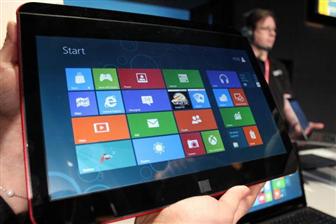 Intel and Microsoft have been keeping close cooperation with first-tier vendors developing new tablet PCs based on Windows 8, with a goal of decreasing the global market share for iPad from 70% currently to below 50% by the middle of 2013, according to Taiwan-based ODMs.
Microsoft will release Windows 8 for x86 platforms in September and Windows RT, a version specifically for ARM architecture, later, the sources noted.
Based on current progress of development, there will be 32 Windows 8 tablet PCs launched by Hewlett-Packard, Dell, Lenovo, Acer, Asustek Computer and Toshiba by the end of 2012, the sources indicated. In particular, Lenovo and Acer plan to launch Windows 8 tablet PCs priced at US$300-1,000, with entry-level models to be sold at below US$300 for competition with Android tablet PCs and models offered by China-based white-box vendors, and models at over US$300 to challenge iPad, including the new iPad and a next-generation iPad, the sources claimed.
In Intel's opinion, Lenovo's strong status in educational and business-use tablet PCs in the China market is a key to driving the global market share for Windows 8 tablet PCs, the sources noted.
Source: http://www.digitimes.com/news/a20120417PD216.html
Sunday, April 22, 2012
 UEFA Euro 2012 is the official video game of the UEFA Euro 2012 football tournament. Unlike previous Euro games, it will be an expansion pack for FIFA 12, will require that game and internet connection, Origin account and the FIFA 12 online pass to run. It will be released on April 24, 2012 for 1800 Microsoft Points.
Gameplay
The expansion will feature an all-new game mode, Expedition Mode (similar to World Tour mode from FIFA Street), where players create a customized team to bid against the European nations. Players can import their Virtual Pro into the mode. The Story of the Finals scenario mode from 2010 FIFA World Cup South Africa will be returning. The user earns points for how well they do which unlock more scenarios.
The game will include all 53 UEFA-member nations. The user can play a full version of Euro 2012, from qualifying all the way to the final, or start at the Euro 2012 finals. All 8 official stadiums of the tournament will be included in the game.
Subscribe to:
Posts
(Atom)